-
Science of Learning: Deductive Reasoning
Deductive reasoning is not a natural way to think and must be learned. As a higher order thinking skill, the cognitive functioning necessary to engage in deductive reasoning develops during adolescence. However, deductive reasoning is difficult to carry out, and normally becomes evident only after formal instruction in deductive reasoning. Deductive reasoning…
-
Science of Learning: Complex Inductive Reasoning
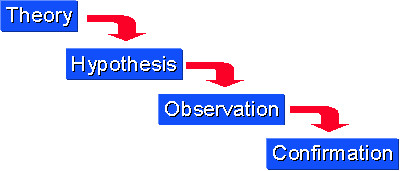
The difference between inductive and deductive reasoning is that they are really what you could think of as opposites. Deductive reasoning is going through the process of reasoning in order to understand the world from a general idea to the specifics of how that general idea works in particular instances. Hypothetico-deductive reasoning…
-
Science of Learning: Rational Thinking
Rational thinking is the most difficult of the higher order thinking skills to define and work out how to foster within formal education. We are all rational beings, at least from the inside out. Rational thinking can be defined as aligning our thoughts and actions to our beliefs. If we do that,…
-
The Creative Process
I’ve written generally about creativity, the individual dispositional traits and attitudes conducive to creativity, and how the environment and culture a person finds themselves in can help or hinder creativity. Today I’m writing a little bit about the creative process itself based on interviews with individuals who have been recognized for creating…
-
Creative Environments
In addition to the dispositional aspects of creativity that I previously wrote about, there are environmental aspects that we have more control over. There are definitely cultural and social environments that enhance the abstract cognitive enabler of creativity and the creative process and will allow dispositional aspects to flourish. Most creative individuals…
-
Disposition for Creativity
There are certain dispositional attributes that those who have exhibited higher-order creativity bring with them to the table. Miller tells us that from Picasso to Einstein, there are similar traits that can be observed in those who create have abstract cognitive enablers. One of the similarities is a great in-depth knowledge of…
-
What is Creativity
I wrote earlier about creativity as being the polar opposite of conformity. Now I am going to be publishing a series of articles about creativity as an abstract cognitive enabler. Much of what I am going to be writing on here relies on the work of Carl Newman and his work in…
-
Science of Learning: Thinking & Understanding
In addition to teaching content, the primary, avowed purpose of higher education is to teach people how to think, and take information and turn it into knowledge. The difference between information and knowledge is understanding. Knowing that 2X2=4 is nothing more than information if you really don’t understand that 2X2 means two…
-
Science of Learning: Metacognition in Education
Not only is it difficult to measure and develop metacognitive skills, but the current state of education systematically stifles metacognitive development. One of the hallmarks of metacognitive development is divergent thinking. Divergent thinking requires an individual to think of different ways that a solution can be reached. It requires cognitive flexibility, as…
-
Science of Learning: Metacognition in Life
As with most of the higher order thinking skills, metacognition plays a wider role in life than just academic work. However, metacognition has, by far, the widest reaching effects in people’s lives as the following list demonstrates. This is likely the reason why educators have focussed and tried to develop metacognition in…