Luddites Then and Now: Fear, Backlash, and the Right Response to AI Disruption
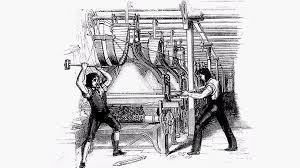
Centuries ago, skilled textile workers known as Luddites took up arms—literally—against the encroaching tide of powered looms and factory machines. Their protests were not born of ignorance but of real, pressing fear: the new technologies threatened their livelihoods and destabilized their communities (National Archives, 2022; Historic UK, 2023). In today’s AI-driven world, we witness a similar unrest. Automation and artificial intelligence provoke anxiety and resistance, echoing those historic struggles. The questions we face now are uncomfortably familiar. Is technology a force for progress or peril? Will the jobs supporting entire communities simply vanish? And, most crucially: how should we respond?
The Luddite Legacy: Backlash Against Disruptive Technology
The original Luddites emerged in England during the early 1800s, a period marked by economic hardship and escalating social unrest. Far from unfounded reactionaries, these weavers and artisans protested because new machines allowed factory owners to replace skilled labor with cheaper, unskilled workers. Negotiations failed; their concerns were dismissed. Desperation led to raids where machinery was smashed, but the government responded with force—deploying the military, imposing harsh penalties, and ultimately suppressing the movement (Historic UK, 2023; Smithsonian, n.d.).
Despite the Luddites’ efforts, the march of industrialization continued. Mechanization scaled up production, lowered costs, and permanently altered the fabric of British society. The skilled jobs the Luddites fought to save largely disappeared, replaced by roles requiring new capabilities.
AI Era: Familiar Fears and Fresh Backlash
Fast forward to our time, and the “Luddite spirit”—fearful, resistant, defensive—has re-emerged as robots, algorithms, and generative AI threaten traditional careers (Cassidy, 2025; Merchant, 2023). Recent studies forecast immense job displacement: Goldman Sachs, for example, estimates hundreds of millions of jobs worldwide will be directly threatened by AI, including knowledge work once considered immune (Cassidy, 2025).
Modern anti-AI sentiment surfaces in public protests, litigation, tech policy debates, and outright resistance to organizational change (Atkinson, 2019). While most people continue adopting new technologies in daily life, anxieties loom large—will AI undo not only jobs, but the dignity, purpose, and social stability they give us?
Why Luddite Reactions Fail—and What Actually Works
History demonstrates one clear lesson: fighting technology with force or denial does not work. The powered looms endured, as did the steam engine, the automobile, and the computer. Luddite tactics did make their point but failed to preserve the status quo. New generations succeeded by learning to adapt, sometimes painfully but always creatively (Cassidy, 2025; National Archives, 2022).
A healthy response to technological revolution isn’t nostalgia or destruction, but deliberate, thoughtful adaptation. This means:
- Assessing Impact: Honestly evaluate which roles will vanish, which will change, and which will emerge. Studies show that firms investing in AI demand more skilled, more adaptable, and more creative workers (Babina et al., 2023).
- Preparing Strategically: Rather than betting on “safe” jobs, invest in skills that cannot be easily codified or automated: critical thinking, creativity, adaptability, collaboration (Timotheou et al., 2022).
- Continuous Learning: Foster a mindset where learning is a lifelong process, not a one-and-done event. This prepares workers to pivot, grow, and thrive even as job definitions shift (Vorobyov, 2024).
Socelor: Thriving Amid Change, Not Clinging to the Past
At Socelor, our mission is to help people move beyond fear and into resilience. We don’t ignore the growing pains brought by AI and automation, but we refuse to accept a future defined by anxiety, denial, or stagnation. Socelor’s classes focus on what matters most: abstract cognitive enablers (ACE)—thinking skills that empower you to solve new problems, innovate, and collaborate across boundaries. Our approach is built around real-world challenges, individualized feedback, and preparing students to keep pace with change. Time is not on our side; the pace of technological transformation accelerates every month. If you want to avoid the fate of the Luddites, choosing to develop robust thinking skills now is both the most realistic and hopeful act you can take.
Why I Embrace AI in My Own Work
As author and educator, I use AI to support the writing process—gathering evidence, synthesizing information, and generating drafts. Ignoring the most powerful tool ever invented would be as counterproductive as refusing to use a calculator or spell checker today. AI doesn’t replace creative thought; it amplifies it, freeing me to focus on ideas, arguments, and the human side of teaching. It’s not a threat—it’s my ally in crafting meaningful, impactful work.
References
Atkinson, R. D. (2019). A Policymaker’s Guide to the “Techlash.” Information Technology & Innovation Foundation. https://itif.org/publications/2019/10/28/policymakers-guide-techlash/
Babina, T., et al. (2023). The effects of AI on firms and workers. Brookings. https://www.brookings.edu/articles/the-effects-of-ai-on-firms-and-workers/
Cassidy, J. (2025, April 14). How to survive the A.I. revolution. The New Yorker. https://www.newyorker.com/magazine/2025/04/21/how-to-survive-the-ai-revolution
Historic UK. (2023, December 12). The Luddites. https://www.historic-uk.com/HistoryUK/HistoryofBritain/The-Luddites/
Merchant, B. (2023). Blood in the Machine: Origins of Rebellion Against Big Tech. Atlantic Monthly Press.
National Archives. (2022, October 10). Why did the Luddites protest? https://www.nationalarchives.gov.uk/education/resources/why-did-the-luddites-protest/
Smithsonian. (n.d.). What the Luddites Really Fought Against. https://www.smithsonianmag.com/history/what-the-luddites-really-fought-against-264412/
Timotheou, S., et al. (2022). Impacts of digital technologies on education and factors influencing successful integration. Frontiers in Education Technology, 2(4), 230–243.
Vorobyov, D. (2024, February 1). Technology-driven education: A new era of learning. Forbes Tech Council. https://www.forbes.com/councils/forbestechcouncil/2024/02/01/technology-driven-education-a-new-era-of-learning/

